
Barley Intake & Storage
Quality beers and whiskies require quality malts, and for that, you need quality grains.
As Brewster Robert Free said in 1888: “The art of creating good malt out of bad barley has not yet been discovered.” This quote aligns strongly with our core values and, as a result, we ensure that we only intake grains that meet our high specifications.
We’re aided in this due to the close and long-standing relationships we have with growers. At Simpsons Malt, we’re unique among UK maltsters in that we have agricultural merchanting division McCreath Simpson & Prentice (MSP) built within our business infrastructure.
MSP has farming partners across the north of England and Scotland, who are contracted to grow the finest UK two-row barley from 100% certified seed.
Intake
Once the barley is harvested, we look to collect it from farm and deliver it into one of our network of grain stores that we own as soon as possible. This ensures that we have complete control over the raw material and can adequately prepare it for the malting process.
When the wagon loads of two-row barley grains arrive at our sites, they are weighed, with a sample taken from each load and analysed by the team in our laboratory to ensure that the barley is suitable for malting.
There are many tests done in our laboratory before the grains are accepted into our malting sites. The most important of these are focused on the variety, moisture content and viability.
Through checks like these, we make sure that we only accept the very best grain into our maltings.
Our farming partners know these specifications and, as a result, are committed to meeting our high-quality standards.
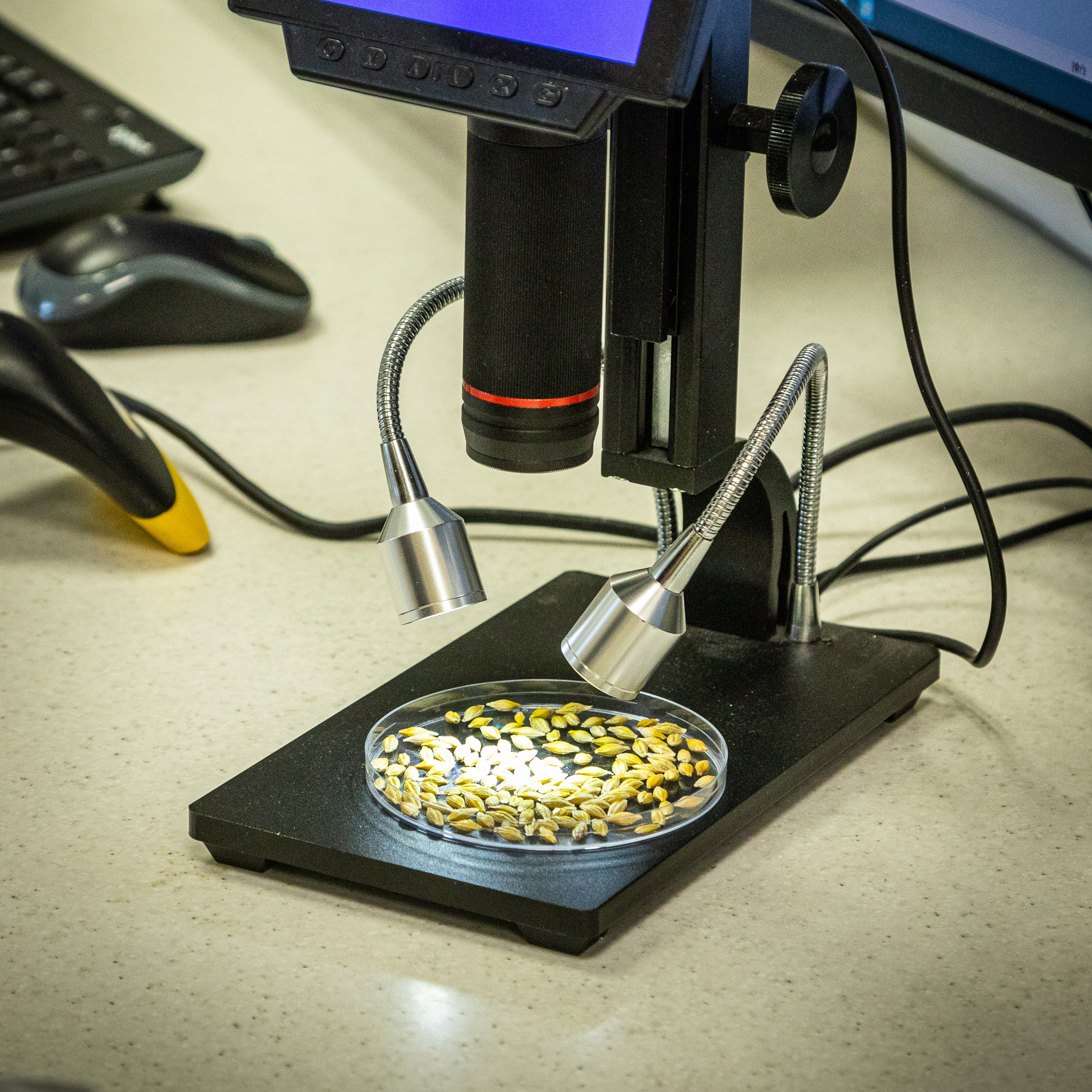
Three key intake tests
Variety purity
Firstly, we need to be certain that the barley variety we receive is pure – we require all our barley to be grown from certified seed.
Moisture
Next, the barley must contain the correct level of moisture for drying and safe long-term storage.
Germinative capacity
Finally, it’s important that the grain’s embryo is still alive and has germinative capacity, otherwise it’s impossible to turn it into quality malt.
Drying
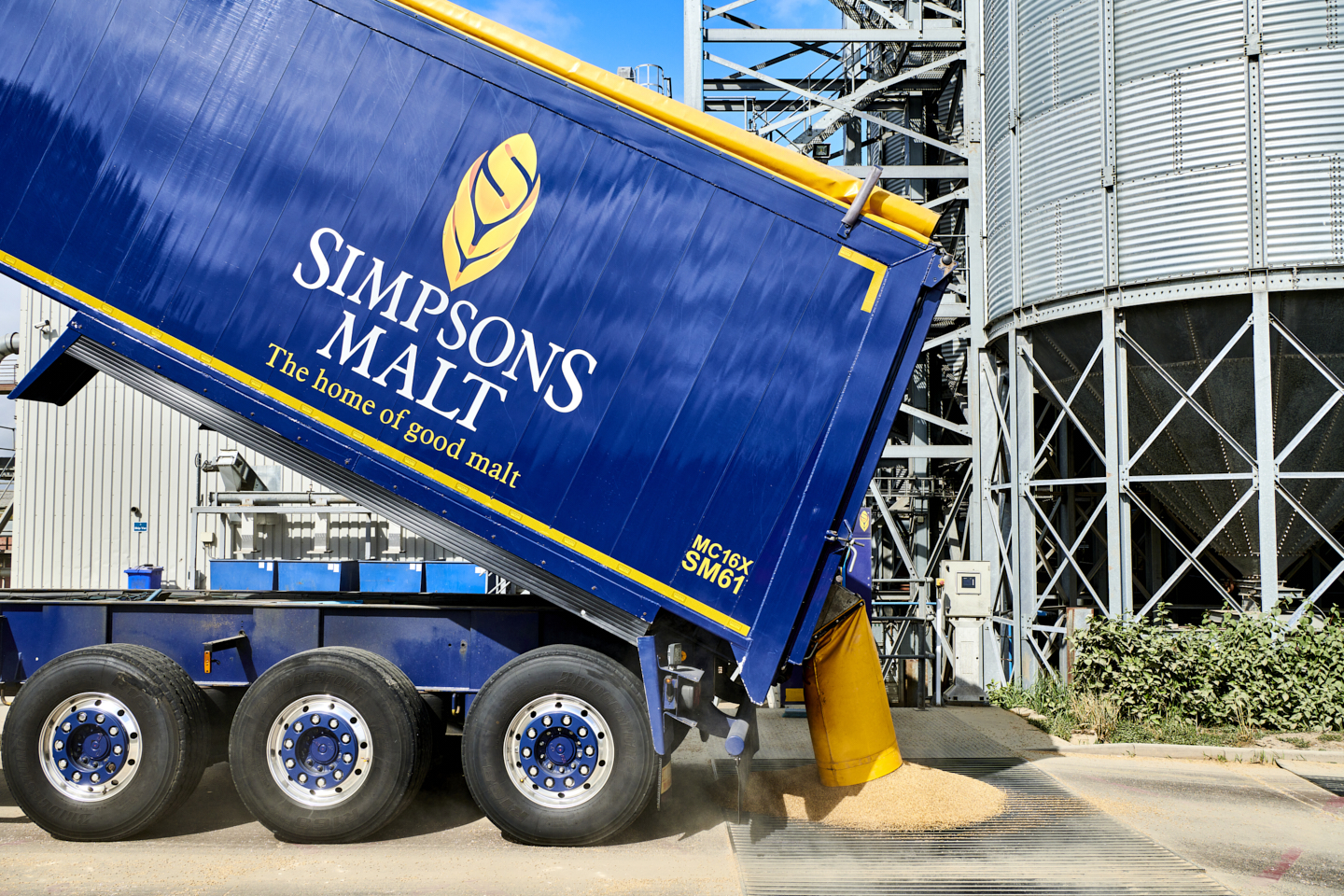
Once the barley has passed all of the checks, the wagon then makes its way to one of the several intake points we have on-site, where it discharges its load.
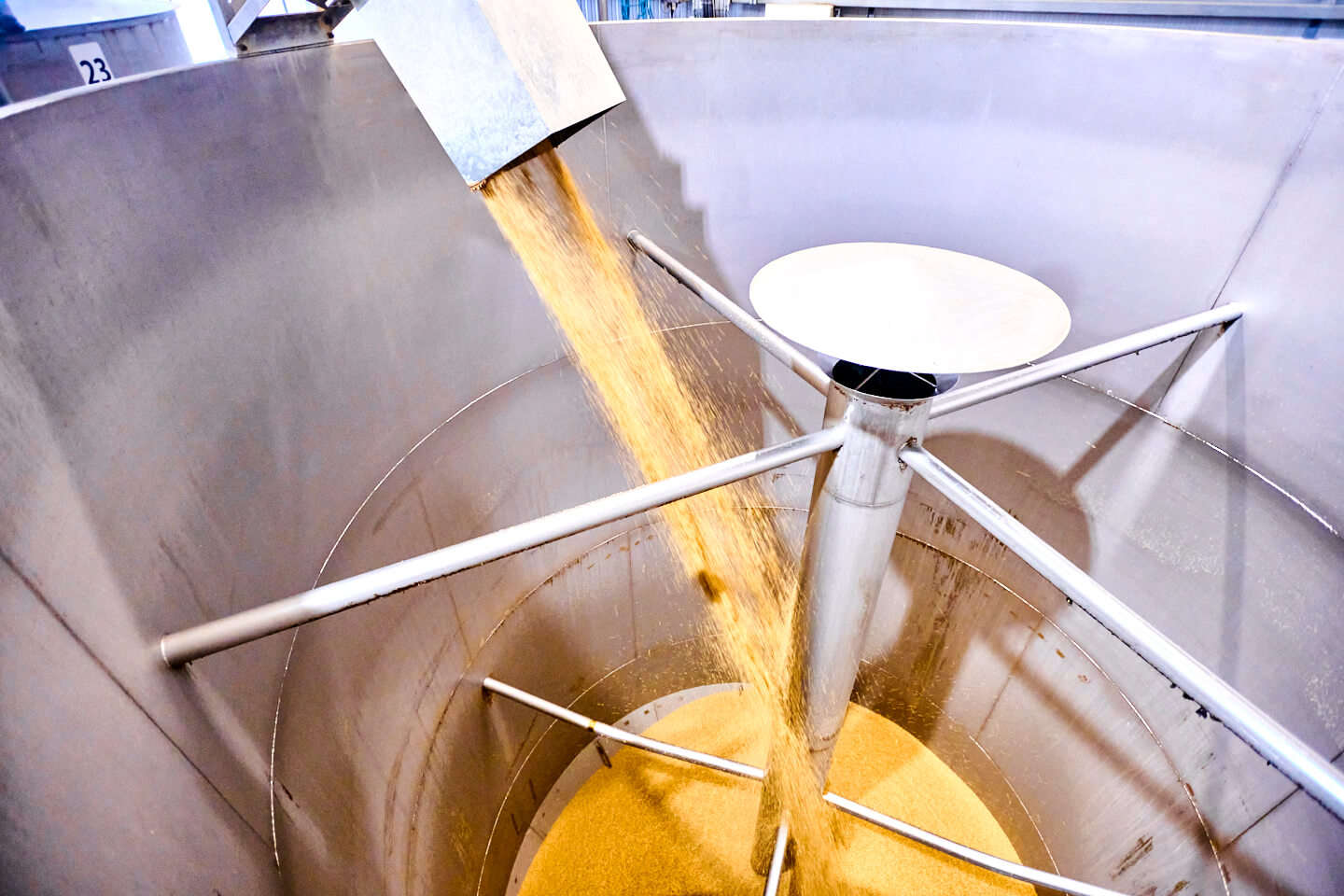
After that, the grains are dried for storage by being circulated with warm air.
It’s hugely important that the air temperature used for drying is tailored to the barley’s moisture content upon intake, otherwise it won’t be dried properly.
Storage
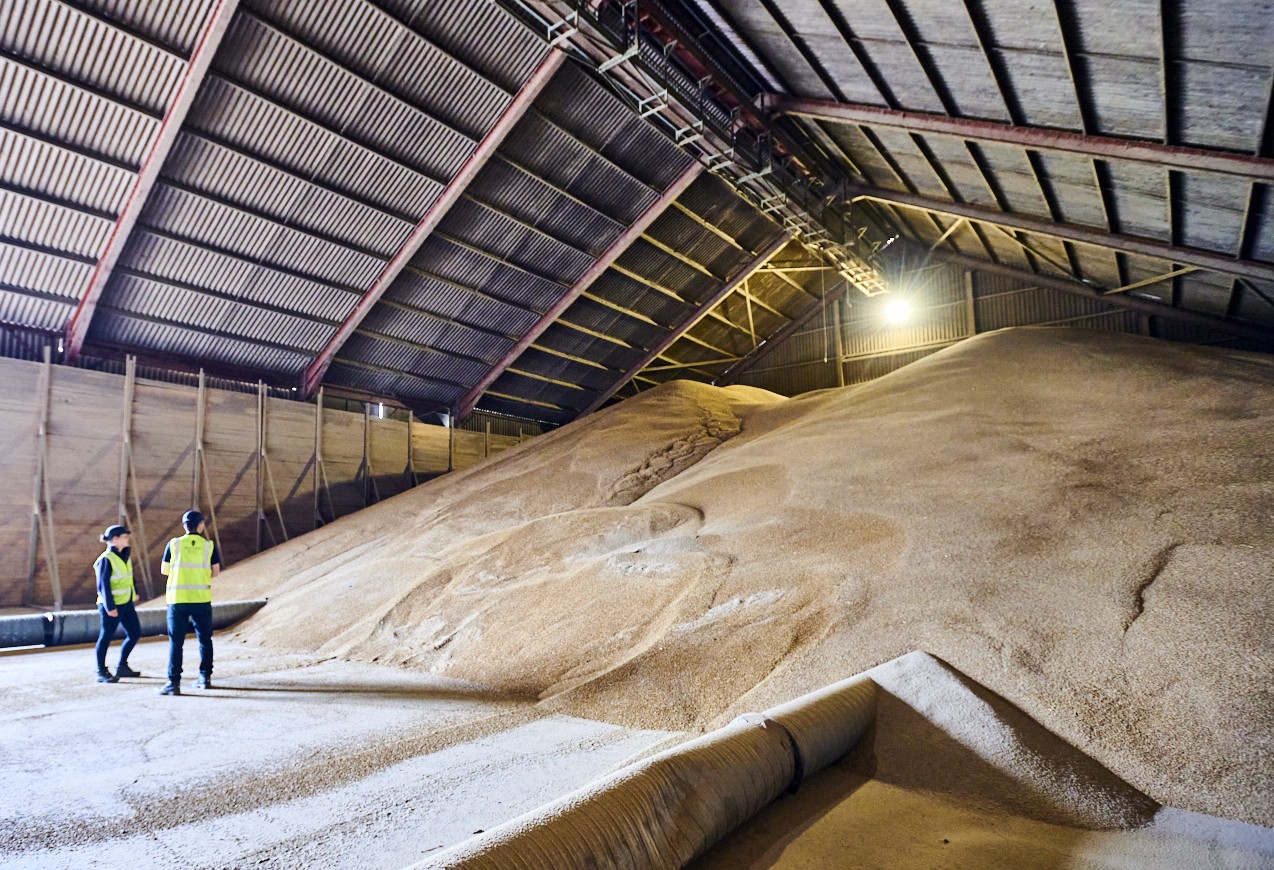
The grains are then delivered into long-term storage silos or flatbed stores warm from the drying process and are held at that temperature for up to three weeks to reduce the dormancy of the barley.
Cooling then begins, with ambient air blown into aeration pipes which sit beneath the barley. It takes around eight weeks to get the storage temperature below 15°C.
Samples are taken on a fortnightly basis to determine germinative energy and water sensitivity. Once these tests have been passed, a sample is micromalted – a very small scale malting process – which will give an indication of the quality that is expected when the batch is malted.
If results from micromalting are positive, the barley is ready to begin the ‘active’ malting process.
Dressing
The malting process begins with steeping, but before that happens, the grains are placed through a barley dresser, which has two layers. The first layer has larger holes which catches items like stones and straw that have been picked up by the combine during harvest.
The second layer has smaller holes and catches the perfectly sized grains of barley on the sieve and lets the undersized grains go.
Undersized grains don’t malt very well and, as a result, are sold as animal feed through MSP. The good barley that has been retained on top of the sieve ensures that we have clean grain of the correct grain size to be put to steep.