
Germination
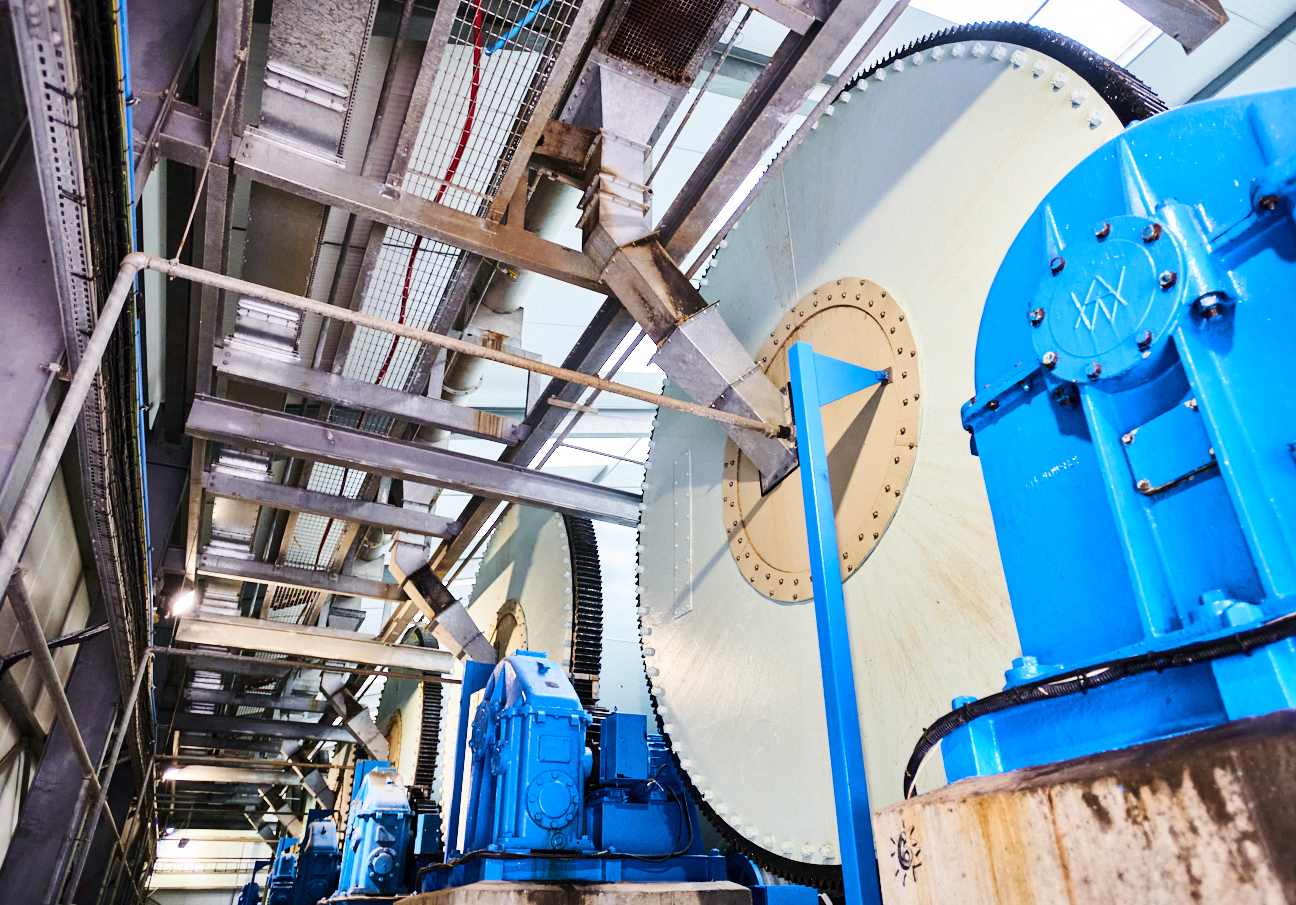
Following the steeping process, the chitting grains of barley are cast into either a germination and kilning Vessel (GKV), germination vessel (GV) or germination drum to continue the germination process.
Broadly speaking, the germination drums and germination vessels (GVs) at our Tivetshall St Margaret Maltings are used for barley that will go on to produce crystal malts in our Roast House.
The germination drums at our Tweed Valley Maltings predominantly serve one of our distilling customers and their specifications.
GKVs, meanwhile, are where the vast majority of our base malts, highly kilned malts and distilling malts complete the process of being turned from barley into malt.
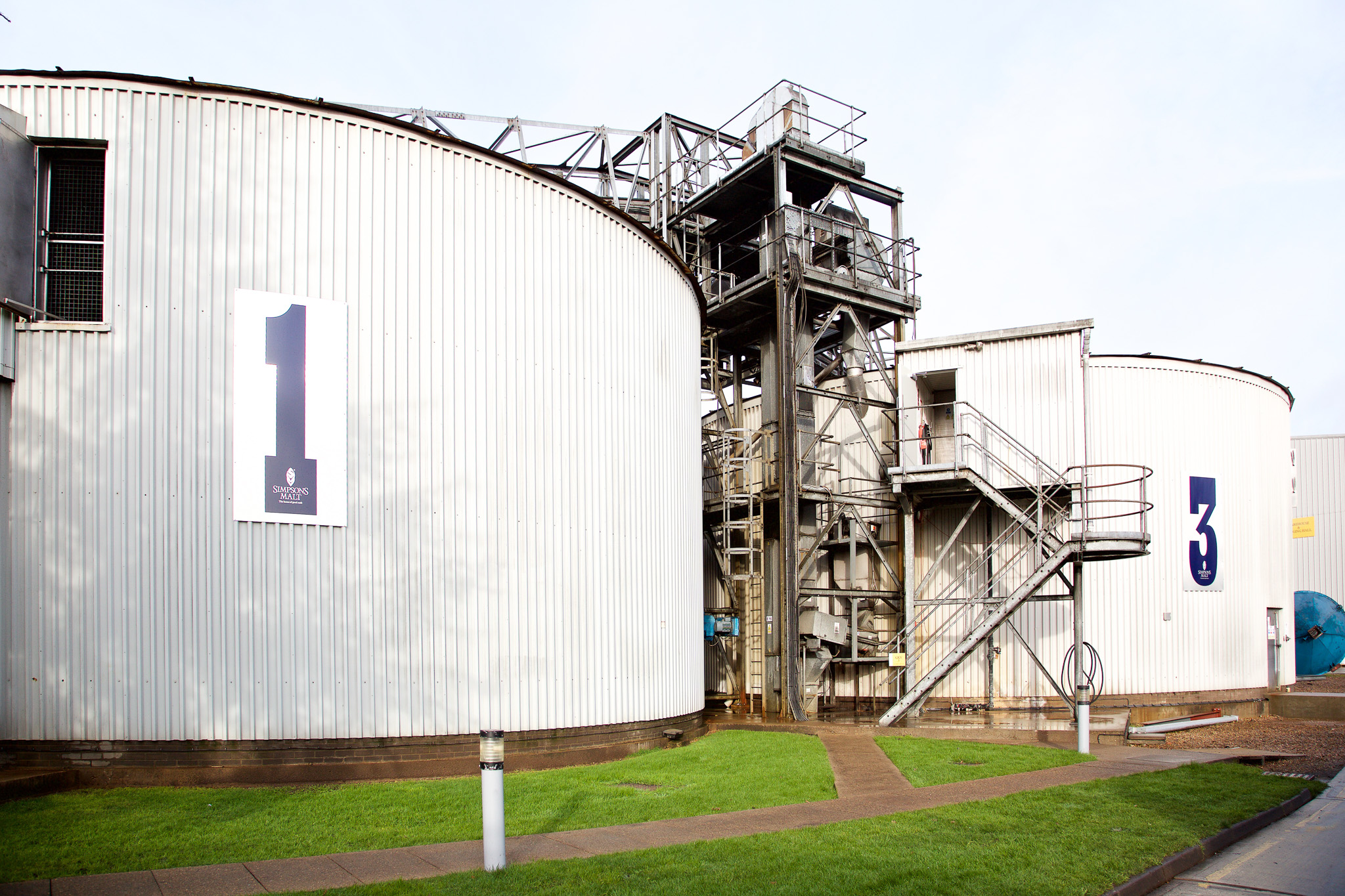
Our GKVs
We have ten GKVs at our Tweed Valley Maltings, split into two groups of five. In one of the groups, the GKVs have a capacity of 300 tonnes and are 26 metres in diameter while, in the other group, the GKVs have a capacity of 400 tonnes and are 30 metres in diameter.
The five GKVs at our Tivetshall St Margaret Maltings each have a capacity of 120 tonnes. The four germination drums can hold 35 tonnes each, while the two GVs have a capacity of 74 tonnes each.
What happens during malt germination?
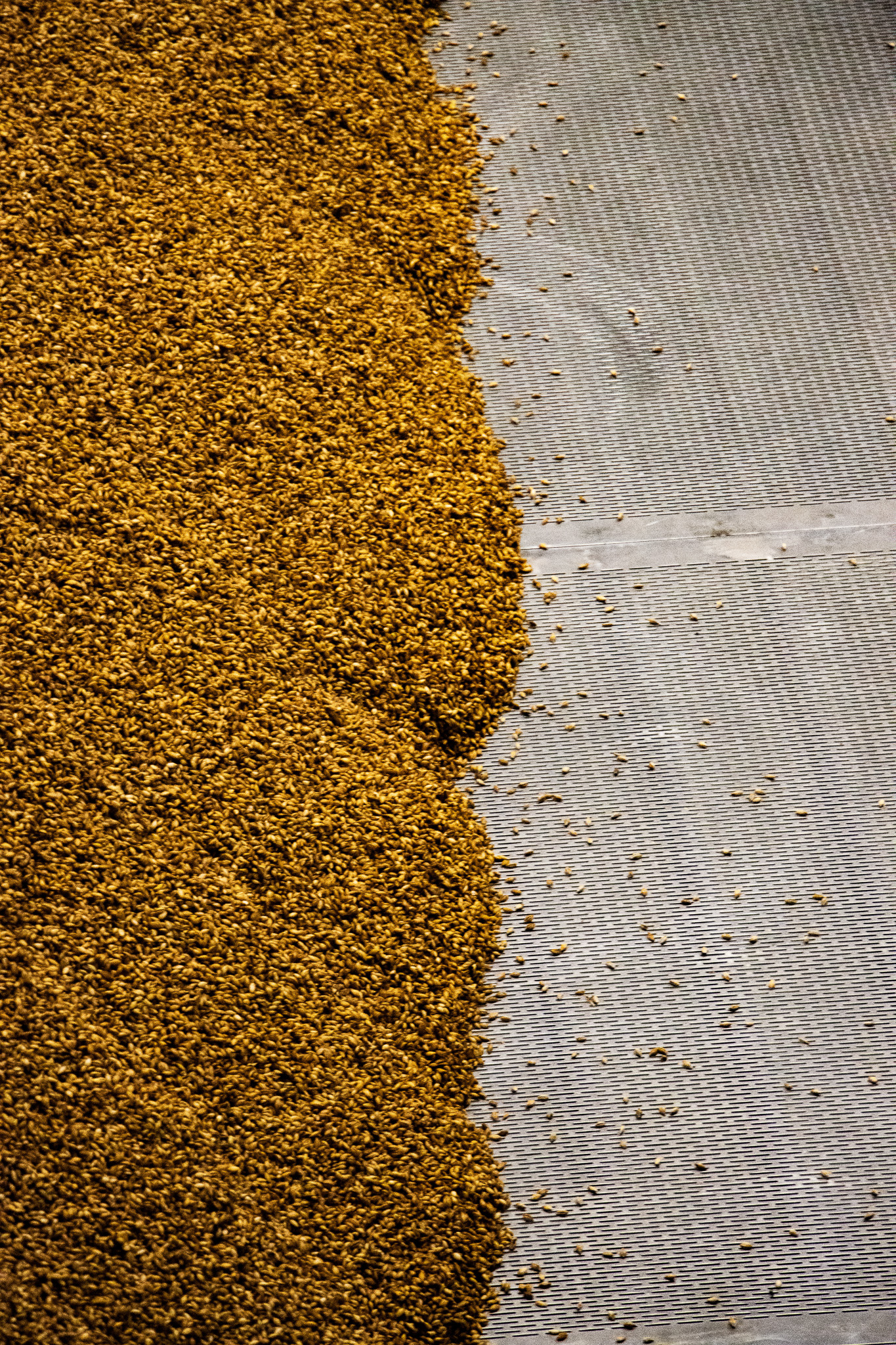
The aim of the germination phase – which lasts for no less than four days – is to modify the endosperm of the grains by breaking down the cell walls, protein matrix and starch granules.
In nature, the modified endosperm feeds the embryo. However, we’re using this step to make the starch granules accessible to the brewer or distiller.
When it comes to the mashing process during brewing and distilling, the starch granules will be broken down by enzymes present in the malt to fermentable sugars.
The germination process
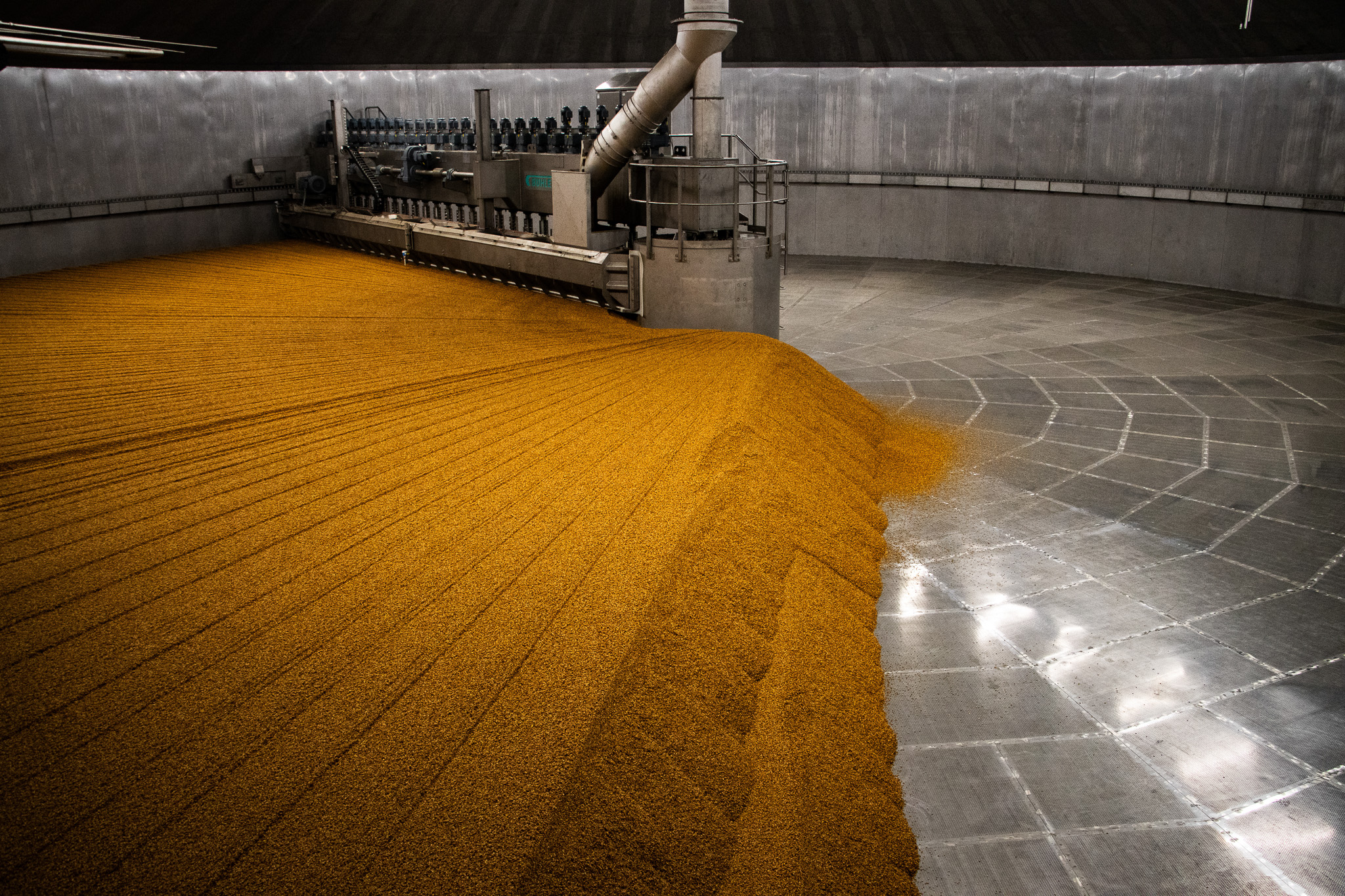
The chitting grains are cast into the GKV, GV or a germinating drum. In a GKV and GV, this occurs via a loading chute in the centre of the vessel. Throughout the casting phase, the floor of the GKV or GV moves to ensure there is an even spread of grain throughout the vessel.
Over the next four days, the barley germinates under temperature and humidity-controlled conditions and the maltster’s role is to judge the point where the endosperm is fully modified.
During this growth phase, little rootlets – known in the malting industry as culms – begin to stick out of the grain. This creates a problem as it starts to impact the airflow.
In a GKV and GV, the floor rotates once again and the grains pass a turner unit, where some of the rootlet growth is broken off. Turning the grain like this helps with circulation and airflow as it prevents the grains from becoming matted.
It also ensures that an even bed is maintained across the vessel and, importantly, maintains homogeneity, with every grain in the batch malted evenly.
Germination drums
In a germination drum, the process differs slightly.
Regular turns take place to help with air circulation inside the drum, while a metal spiral in the centre of the drum assists in trimming the rootlet growth.
By doing all of this, it ensures that the grains are germinated at optimum capacity and are ready to begin the kilning stage.