
Energy Centre
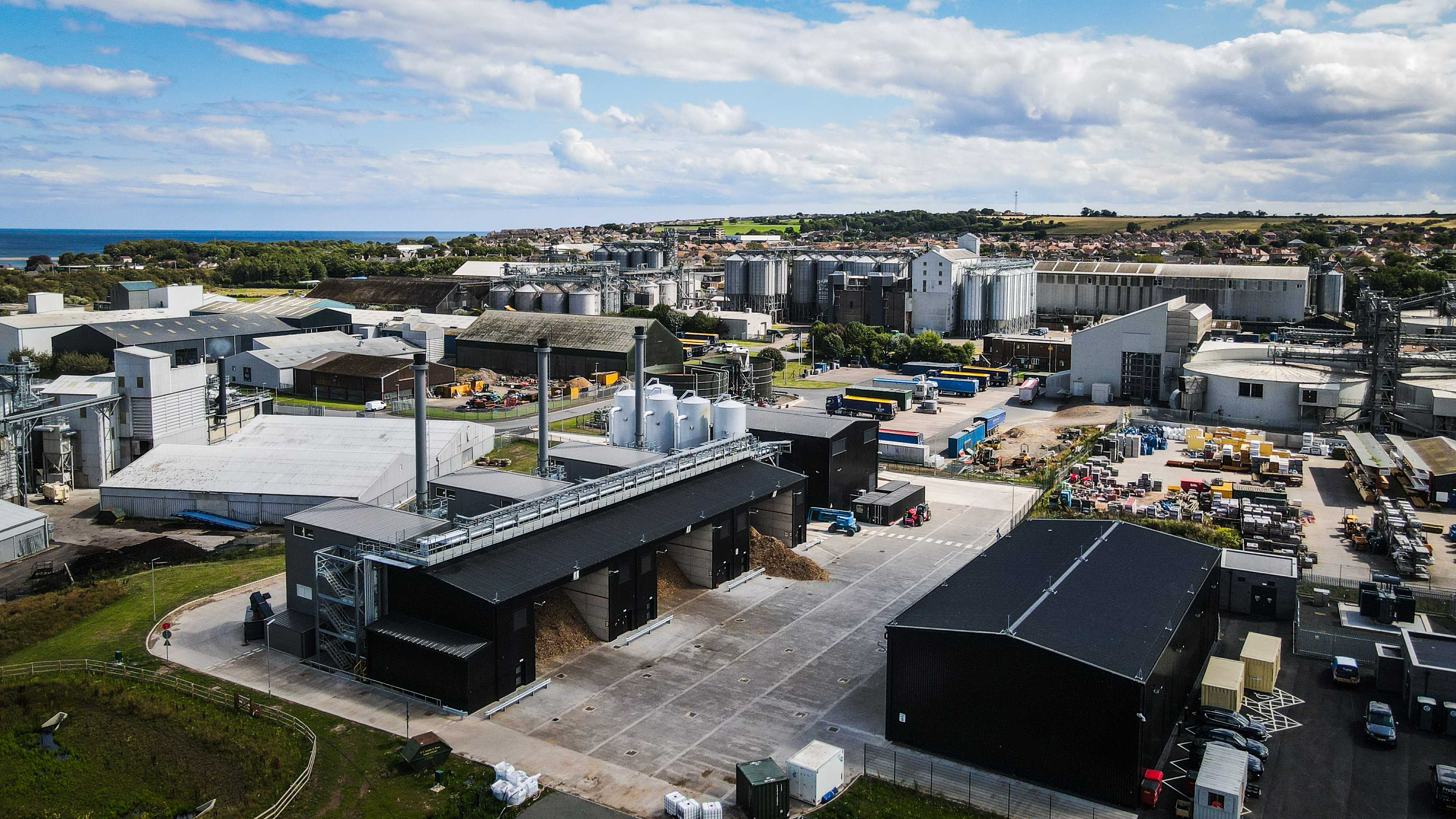
In June 2023, we announced a major partnership with AMP Clean Energy to deliver a low carbon Energy Centre fuelled by renewables at our Tweed Valley Maltings in Berwick-upon-Tweed.
Operational in late 2024, the Energy Centre – located adjacent to the maltings – supplies all the heat required for the energy-intensive kilning process at our Berwick-upon-Tweed headquarters through a long-term heat purchase agreement.
Specifically, the Energy Centre supplies heat primarily through a 12MW electric boiler powered by curtailed wind energy and backed up by three 6MW biomass boilers using locally sourced woodchip, which you can read more about below.
Overall, the Energy Centre has not only significantly reduced our carbon footprint with a goal of net zero Scope 1 & 2 emissions by 2030, but it has also aided with the sustainability objectives of distilling and brewing customers who receive malt produced at this site.
Key facts
90%
Reduction in emissions from the kilning process at our Tweed Valley Maltings
72%
Reduction in the overall malt production carbon footprint at our Tweed Valley Maltings
55%
Reduction in Scope 1 & 2 emissions company-wide following the Energy Centre commissioning
25,000
Tonnage of CO₂ savings annually – equivalent to the gas used by 11,000 UK homes
Curtailed wind energy
Our 12MW electric boiler is powered by curtailed wind energy and this project signified the first time in the UK that power for a high-voltage electric boiler has been generated in this way.
So, you're probably thinking – what does this mean?
Well, sometimes the UK generates more wind power than the grid can use or move.
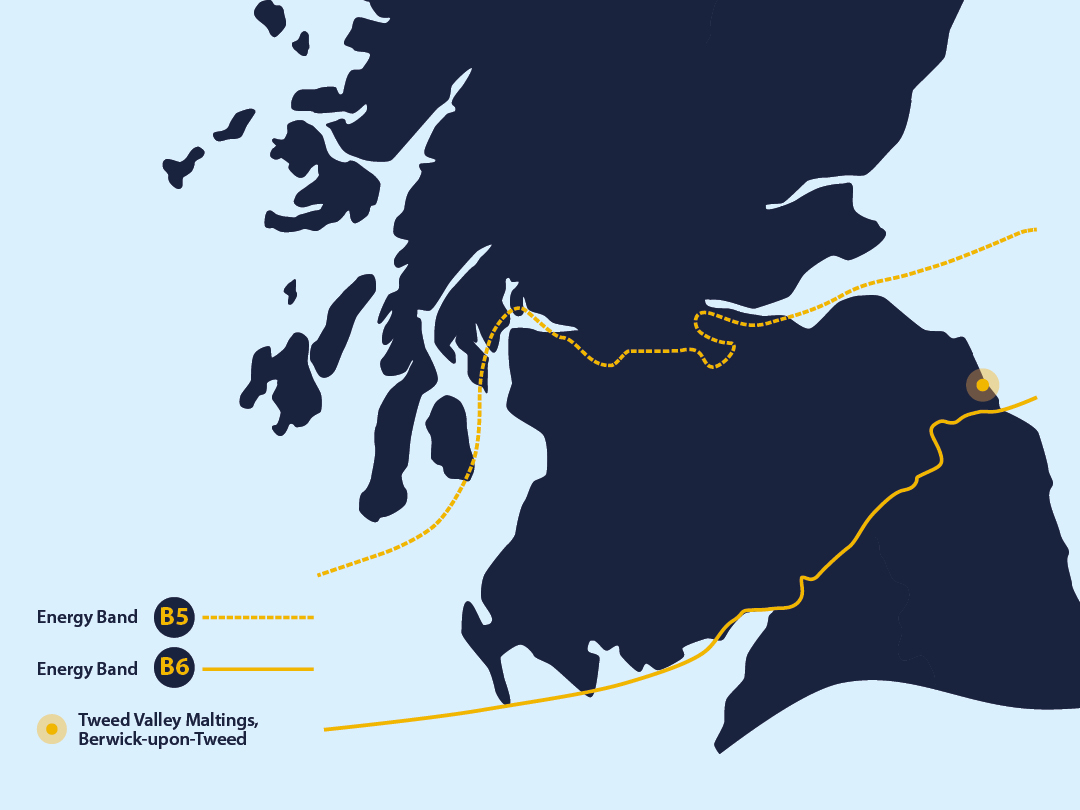
The national grid is divided into energy bands, and our Tweed Valley Maltings in Berwick-upon-Tweed sits between B5 and B6 – an area producing far more renewable electricity than it consumes.
When local demand can’t absorb the excess generation, wind farm operators are paid by the Government to temporarily switch off turbines – a process called curtailment.
Our e-boiler
The grid struggles to send surplus energy south to more populated areas because it was originally designed to move electricity from a few large fossil-fuel stations northwards; not to transmit renewable energy from Scotland and northern England to the Midlands and southern England.
Upgrading transmission lines takes years so during strong winds, turbines are often turned off to avoid overloading the system. Our location in a lower use zone allows us to capture this otherwise wasted electricity.
The 12MW electric boiler at our Energy Centre converts it into heat for kilning – the most energy intensive stage of the malting process – which reduces fossil fuel use and eases grid pressure.
Biomass
The electric boiler is supported by three 6MW biomass boilers, which can be used during periods when there is no excess renewable electricity generation.
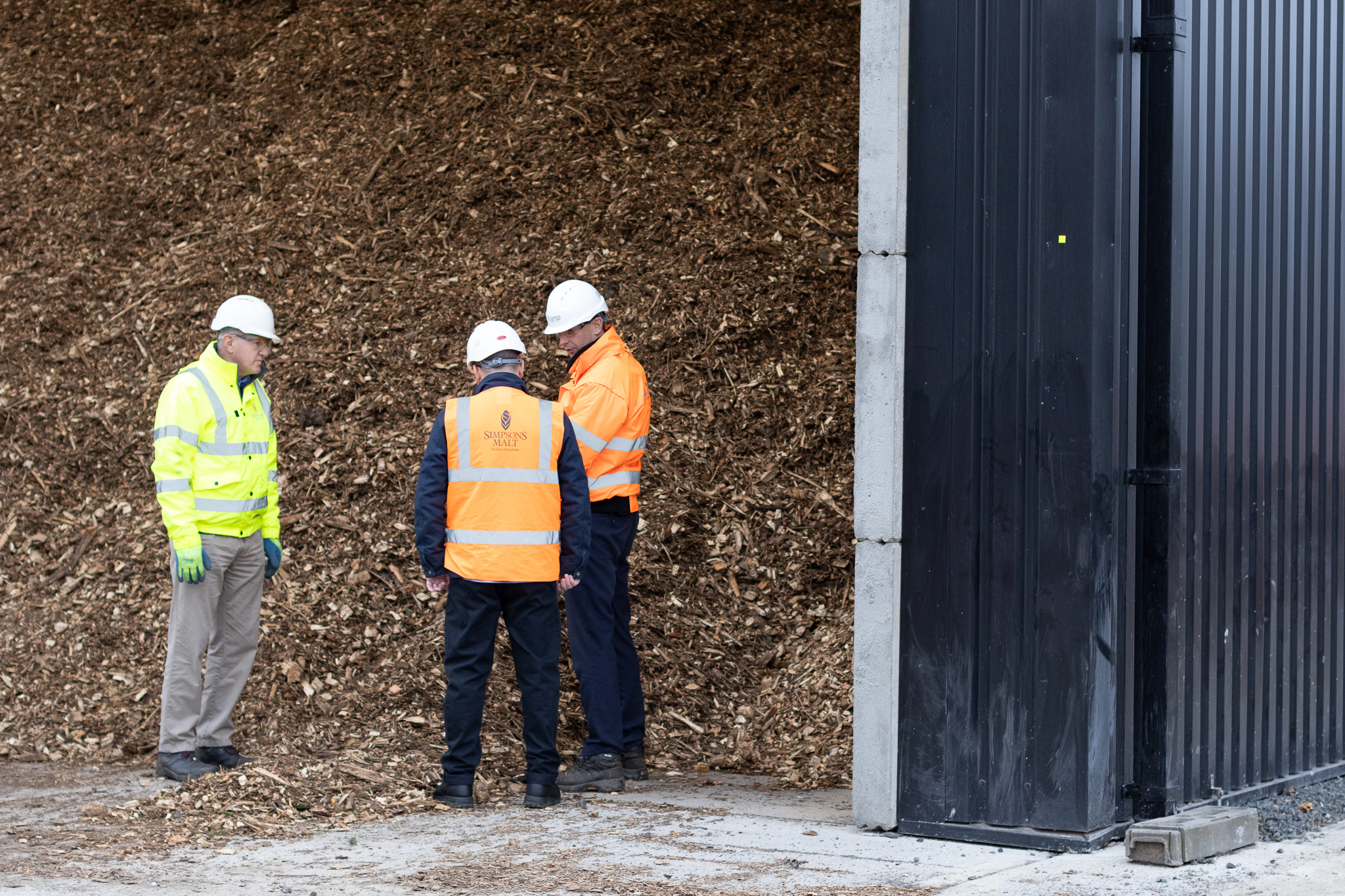
The biomass used is not made from high-quality timber or virgin forests. Instead, it comes from low-value, clean and untreated wood residues that have no viable alternative use.
These materials, often referred to as ‘virgin residues’, would otherwise decompose and release CO₂ without displacing fossil fuel use.
By using them for heat, they contribute to carbon savings. All biomass is sourced within 50 miles of the site where possible and meets rigorous sustainability standards including BSL, FSC and PEFC certification.
The biomass fuel blend consists of:
55%
Forestry residues
Small branches, thinnings and offcuts left after timber harvesting
40%
Urban tree management residues
Waste from roadside, railway and municipal tree surgery
5%
Sawmill residues
Bark and offcuts from UK sawmills
Lower carbon malt
Barley and malt production makes up a significant part of a distillery or brewery's Scope 3 emissions.
By choosing to work with us and receiving malt produced at this site – where the malt production carbon footprint is 72% lower than standard production methods – end users can make meaningful carbon footprint reductions.
If you're interested in working with us and getting your hands on this lower carbon malt, click on the button below to get started.