
Low Carbon Fertilisers
Having McCreath Simpson & Prentice integrated within the business has enabled us to engage directly with both fertiliser manufacturers and contracted growers as we seek to decarbonise the malting barley and distilling wheat supply chains.
Fertiliser production and application represents around 40% of the malt carbon footprint per tonne and, building on partnerships announced in 2023, we have continued to work closely with Yara UK and OCI to expand the availability of low-carbon fertilisers to our contracted growers.
Following a successful 2024 pilot, we increased the contracted malting barley tonnage grown using low-carbon fertilisers by 60% for the 2025 crop year, extending coverage across key growing regions.
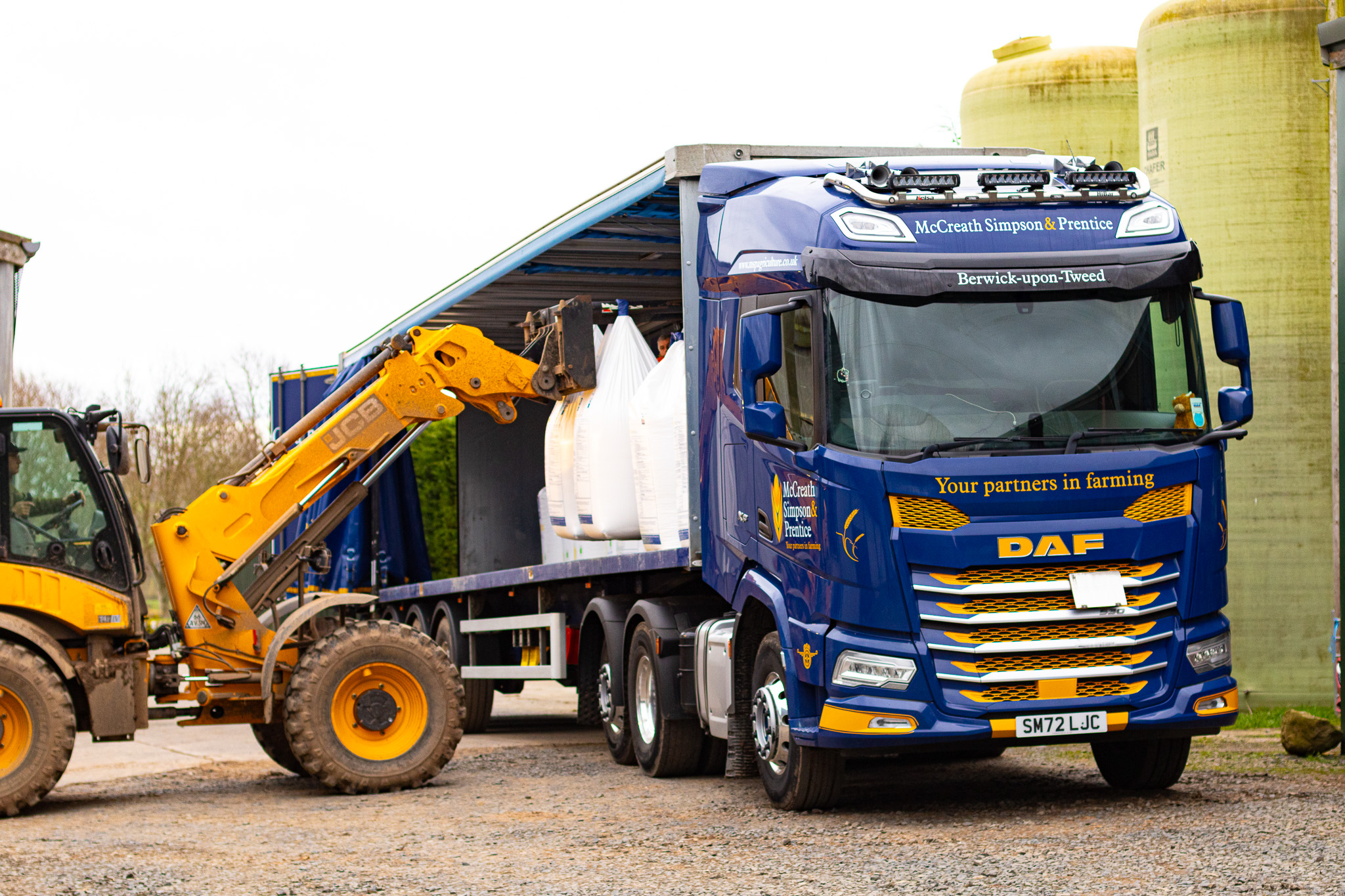
2024 pilot results
6,500
Tonnage of malting barley grown with low-carbon fertiliser applied
6.3 t/ha
Average yield across farms in the pilot
20%
Reduction in on-farm GHG emissions due the lower carbon footprint of fertiliser production
By using biomethane feedstocks instead of fossil gas, these fertilisers deliver a production carbon footprint up to 50% lower than conventional products.
The results from our 2024 harvest confirm that these reductions translate into meaningful on-farm benefits, with GHG emissions down by up to 20% on farms.
This is also without compromising yield or grain quality, with an average yield of 6.3t/ha across the farms in the pilot.
This work represents a critical stepping-stone toward our longer-term goal of adopting green ammonia-based fertilisers, manufactured using renewable electricity and water.