
A decade of Laureate: Is it still the best spring barley variety for maltsters, brewers & distillers?
Few varieties spend a decade on the AHDB Recommended List, but Laureate has done exactly that.
First listed in 2016 with full approval for both brewing and distilling attained in 2017, this spring barley variety has proven itself as a dependable, all-round performer. Ten years on, it remains the most widely grown spring barley across the UK and accounts for a significant share of our contracted barley purchases.
Bred from Sanette x Concerto, Laureate arrived armed with game-changing yield potential and a strong agronomic profile. No two years are ever the same, but over the last decade agriculture has navigated repeated pressures, whether that be rising input costs, supply chain issues, climatic extremes and market uncertainty. Laureate has seen and experienced it all.
So, what is it that has kept Laureate at the top for so long?
What has kept Laureate at the top?
Ask anyone in the supply chain why Laureate has remained dominant on the RL for so long and the answer tends to be the same word: consistency.
Much of this is attributed to Laureate's strong tillering ability, giving the variety the agronomic resilience to handle whatever a UK growing season throws at it.
Its disease resistance package reinforces this dependability, with AHDB ratings of 9 for mildew and 8 for net blotch helping to give it one of the strongest disease resistance profiles on the RL – a key advantage when input costs remain elevated and margins are under pressure.
Beyond agronomy, its full Malting Barley Committee (MBC) approval for both brewing and malt distilling has been key to its longevity. Dual-purpose status ensures that growers aren't tied to a single market and that flexibility has real value in years when either brewing or distilling demand is low.
Indeed, here at Simpsons Malt, we procure Laureate spring barley from Scotland and northern England for the production of distilling malts at our Tweed Valley Maltings in Berwick-upon-Tweed, and we also purchase the variety directly from growers in East Anglia for the production of base brewing malts at our Tivetshall Maltings in Norfolk.
It means that if you're receiving either Best Pale Ale, Extra Pale Ale or Finest Lager Malt from us in 2026, it'll have been produced using Laureate.

Why growers and distillers keep coming back to it
For growers, Laureate's appeal lies in it being the second highest yielding spring barley on the AHDB Recommended List and crucially, holding that position in untreated yield too. It performs consistently across all regions and soil types, with particularly strong yields in the north and west. Its maturity rating of +1 is another advantage, especially in more northern areas where having a variety that does not ripen too late is a key consideration. Combined with its dual-purpose approval, it is easy to see why Laureate accounted for 43% of the total UK spring barley area in 2025.
For distillers, Laureate's non-GN status removes the risk of glycosidic nitrile compounds that can lead to the formation of carcinogens in the final spirit. Its high hot water extract and strong spirit yield ensure consistent processing performance. This reliability is reflected in its dominance of maltsters' purchasing, accounting for close to 60% of spring barley intake across England and Scotland.
How does it compare to the long-servers of the past?
Varieties come and go, each promising the next step forward and yet, more often than not, they can't sustain their position beyond a few seasons. Shifts in agronomics, disease pressure, seed availability and end-user requirements can often see them overtaken by an up-and-coming variety.
To understand how exceptional Laureate's tenure has been, it's worth looking back at the varieties that preceded it or have tried to contend with it.
Optic is the closest comparison and at its peak, it accounted for nearly three quarters of all spring malting barley purchases in England during the 2004 harvest. However, as yield performance declined, its dominance faded and Optic's time at the top was over. Concerto and Propino followed similar routes but were ultimately unable to hold their position as newer genetics came through.
Will it get knocked off its perch soon?
Fast forward to today and as new genetics continue to come through, there is no shortage of contenders looking to challenge Laureate's position.
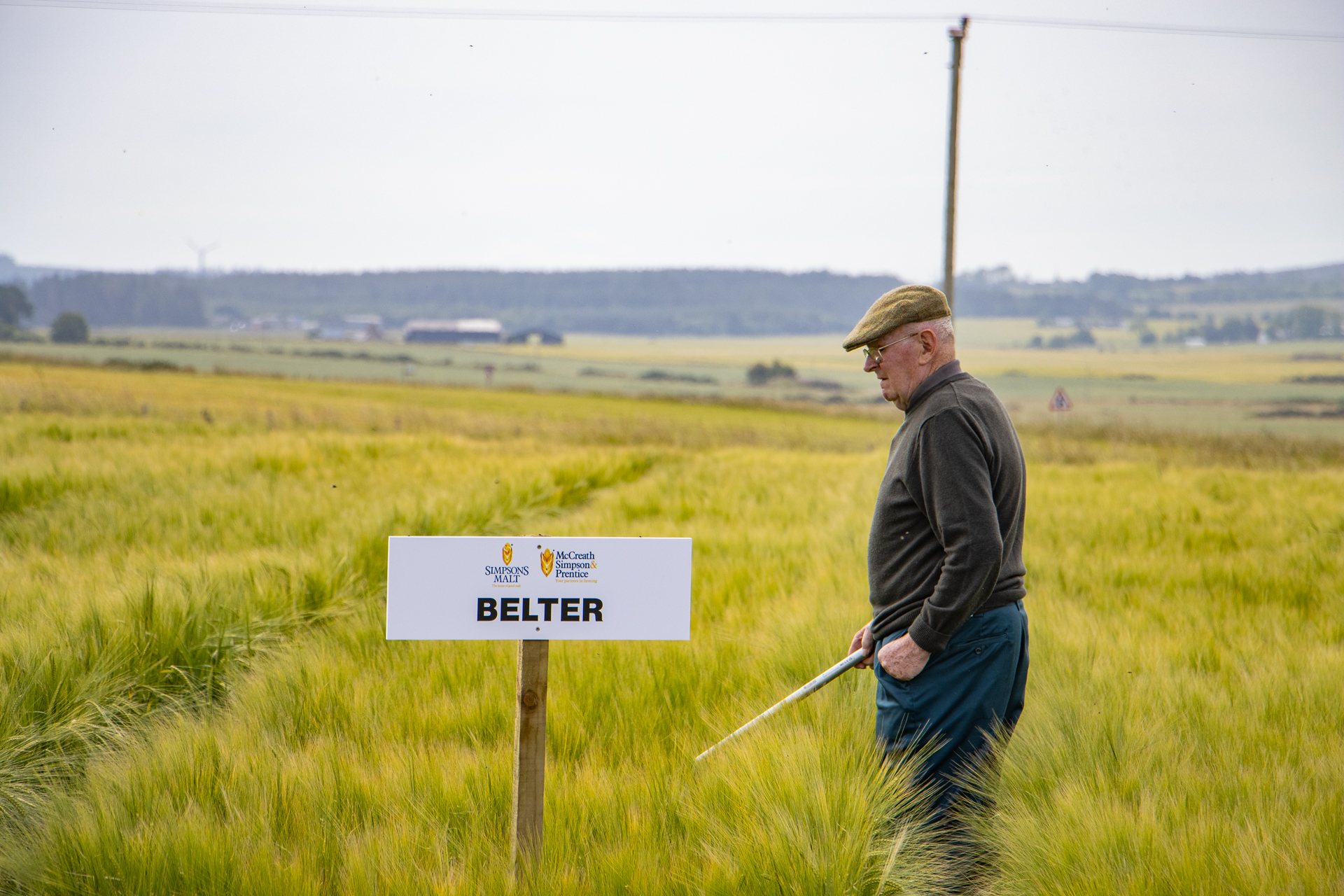
LG Diablo first featured on the AHDB Recommended List in 2018 and has full approval for both brewing and distilling, very hot water extract and a better specific weight than Laureate, but has commanded a significantly lower market share than Laureate, partly due to its later maturity. Two of the newer varieties, Belter and SY Arrow have both gained approval in more recent years and interestingly have Laureate in their parentage. Belter has made a strong impression, offering a better specific weight than Laureate which proves promising for buyers focused on quality margins. Meanwhile, Sy Arrow's disease resistance profile has attracted attention.
However, displacing Laureate is no small feat and as yet we are waiting to see if the newcomers will offer a consistent step up in yield or quality, enough to persuade growers to switch from a long-standing and trusted variety.
Current market conditions may just be enough to keep Laureate at the top as the UK malting industry navigates reduced demand, with both growers and buyers likely to gravitate towards what they know and trust.
That said, no variety holds the top spot indefinitely and while Laureate has done what Optic did before it – and arguably more – the competition from up-and-coming varieties is strong.


Share