
Establishing biodiversity plots alongside spring barley
Producing consistent, high-quality barley starts with understanding how different varieties perform in the field, while we're also seeing a shift in farming practices that have the potential to improve both productivity and sustainability.
Over the past three years, in addition to our long-standing spring barley variety trials site at Beal Farm in Northumberland, we've established a network of trials throughout Scotland.
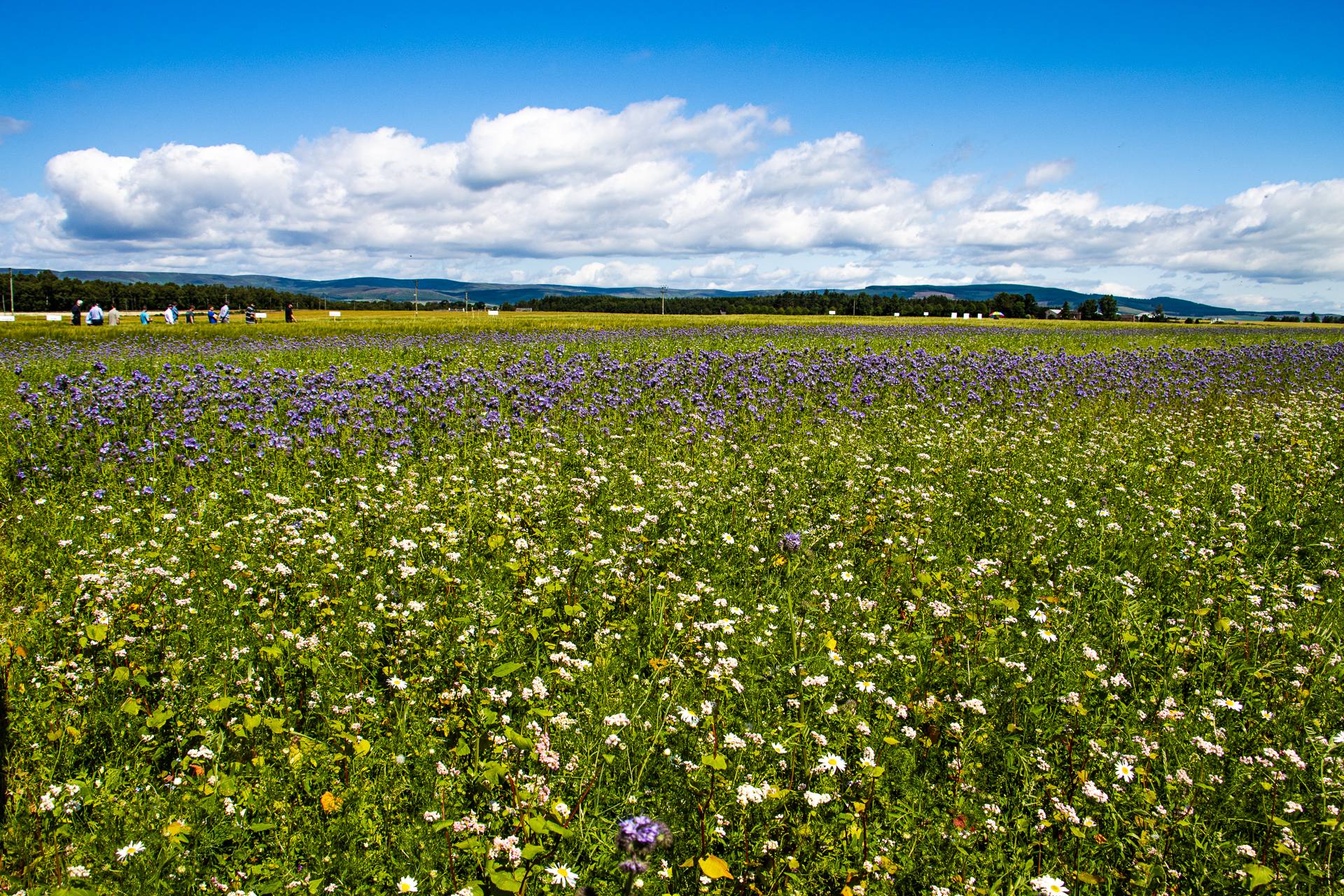
For the first time, biodiversity plots were established on the headlands of each of these sites, showing how environmental measures can sit alongside productive arable farming.
Why do we run these trials?
The introduction of biodiversity mixes to our trials sites doesn't change their primary purpose, which remains to evaluate the regional agronomic performance and malting performance of spring and winter barleys, winter wheats and seed treatments.
In terms of agronomic performance, helping us understand how varieties perform across different regions allows the Farm Traders at our agricultural merchanting division McCreath Simpson & Prentice (MSP) to make more informed recommendations to growers.
In terms of malting performance, meanwhile, samples of the barley varieties from our trials sites are later micromalted in our on-site lab to assess their distilling characteristics well ahead of official data being released, giving us a technical and commercial edge. Samples of the wheat varieties are also assessed for distilling performance, looking specifically into spirit yield and processability.
By conducting trials ourselves – rather than solely relying on industry data – we are able to reduce risk, improve our recommendations to growers and explore new routes to lower environmental impact, both on-farm and through the supply chain.
Why have we introduced biodiversity plots?
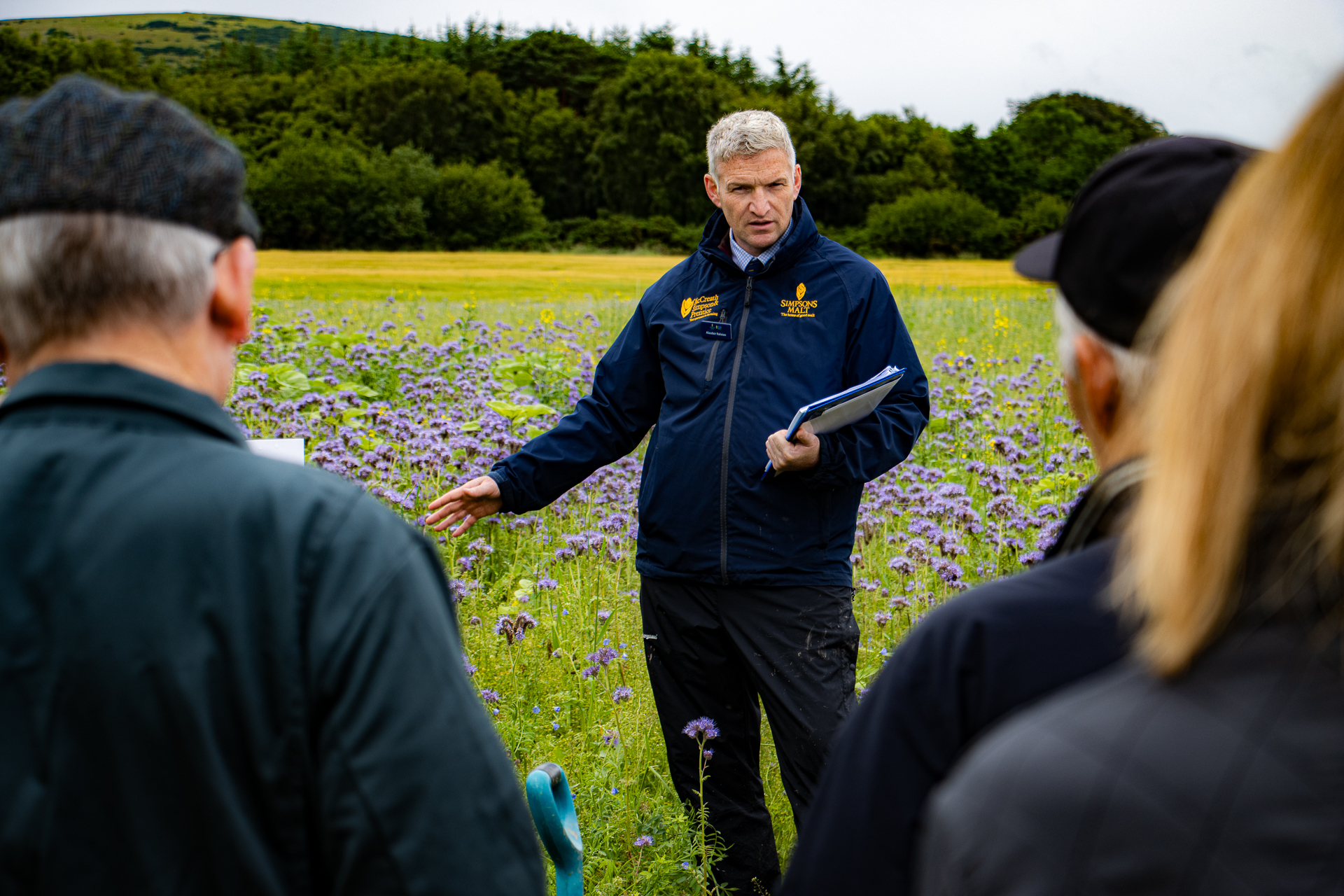
As environmental schemes and Integrated Pest Management (IPM) become a greater part of commercial farming, biodiversity mixtures are offering growers options to deliver more than one benefit from the same area of land.
Biodiversity mixtures provide more benefits than solely supporting wildlife, including improving soil health, retaining nutrients, enhancing soil structure and encouraging beneficial insects, which all help growers build more resilient cropping systems.
At our sites, the biodiversity plots have been established on the headland of the field, which is often the least productive area and is traditionally left as stubble over winter. By putting these areas to work, growers can improve biodiversity and soil function without taking significant areas of productive land out of food production.

How we're assisting growers
Through having MSP within our business, our team of in-house industry experts work closely with growers to understand their rotations, soil types, cropping plans and environmental objectives before recommending biodiversity mixtures tailored to their individual farm.
By establishing biodiversity strips alongside commercial barley and wheat trials, we're able to see first-hand how different mixtures establish and how they fit alongside barley and wheat crops.
This knowledge is complemented by our on-site grass seed blending plant at our Tweed Valley Maltings headquarters in Berwick-upon-Tweed. This means that we don't just advise on the best mixtures for farmers, we can create and supply them to farmers throughout Scotland and northern England.
Our biodiversity mixtures have been developed to help our farming customers meet a variety of objectives.
For example, our EFA Green Cover Mix has been designed to encourage and support pollinators alongside beneficial insects that prey on cereal pests such as aphids through nectar-rich species such as phacelia.
Others, like our Black Oats & Legume Mix, improve soil structure with their deep-rooting system, while our EFA Legume & Herb Rich Mixture provides a productive grazing option for sheep and cattle due to its mineral-rich herbs.



Share